Lamb ribs clay pot, White bean, Zaatar, Onion, Carrot
The dish itself express completely south eastern turkish cuisine where the people eats lamb, mix spices and local carbs such as barley, chickpea etc. . this dish explain the culture and the life style of people in the region. Handmade clay pot by the Anatolians and raised ships by the shepherds feeded naturally. In this this you will find all the richness of region given by the nature to us. The cooking method absolutely how people use to do many years ago. Slow cooking technique in clay pot.
Kadek Bayu Darmika
United Arab Emirates
Inspired by the core memoir of my culinary journey, surrounded by amazing people from around the world in Middle East, which is a ...
Inspired by the core memoir of my culinary journey, surrounded by amazing people from around the world in Middle East, which is a melting pot of culture region, where the aromas, flavors, and tradition come together, create a dynamic culinary scene as it is now. I carry the essence of my roots, to honor where i come from and staying true what i come here for. From my signature dish, i want to educate my guest how important to practicing sustainability. Because, small things can make different...
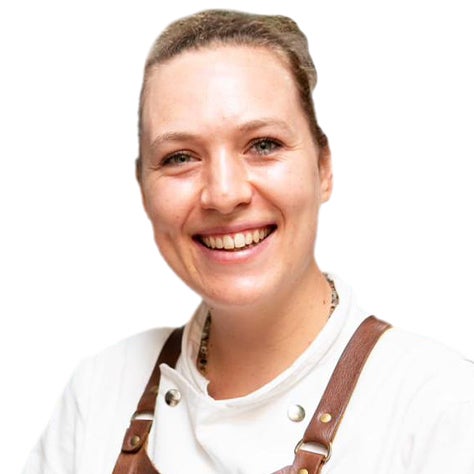
Bianca Strydom
South Africa
I wanted to create a dish that can live on a high class fine dining menu, made with “cheap”, attainable, everyday ingredients that...
I wanted to create a dish that can live on a high class fine dining menu, made with “cheap”, attainable, everyday ingredients that I grew up eating at least once a week. It is so important to remember that knowledge, skill and technique counts for so much, a roast potato, a soft boiled egg and an average plate of pasta have so much potential if you know how to work with them.
Ahmad Sadek
Saudi Arabia
This dish expresses my journey as a chef shaped by humble beginnings, where my earliest memories were on a rooftop in Egypt with m...
This dish expresses my journey as a chef shaped by humble beginnings, where my earliest memories were on a rooftop in Egypt with my grandmother, feeding and preparing duck for our family table. It is a tribute to those shared meals, rooted in Egypt’s ancient Nile Valley culinary traditions and agricultural culture. Through duck, freekeh, and molokhiya, I reinterpret our heritage with refined technique, honoring where I come from and who I am becoming.
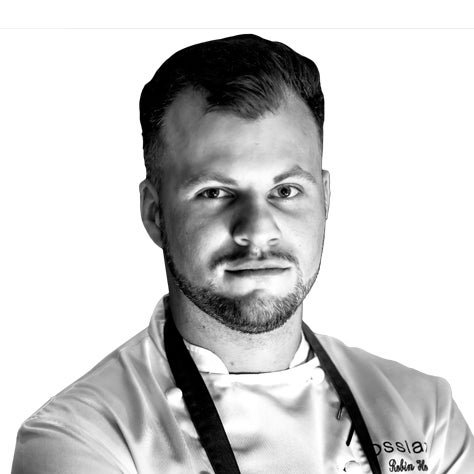
Robin Höfer
United Arab Emirates
During my visit to Egypt, I was welcomed into my friend's family celebration of Eid. Grateful for their hospitality, I offered to ...
During my visit to Egypt, I was welcomed into my friend's family celebration of Eid. Grateful for their hospitality, I offered to cook the dinner to discover their tradition of sacrificing a lamb for the festival. I felt a deep respect for their customs. My dish is inspired by that experience, so I wanted to do a dish where I use the whole animal. Each ingredient, spice, and technique is a tribute to the love and generosity they showed me during that unforgettable time in Egypt.
Babilesh Rajan
India
Through The Fifth Quarter, I want to express a philosophy of care, transformation and respect. Inspired by Tamil food traditions a...
Through The Fifth Quarter, I want to express a philosophy of care, transformation and respect. Inspired by Tamil food traditions around Madurai, where brain, bones and broth nourished families and workers, this dish reimagines overlooked ingredients with intention. The name comes from the “fifth quarter” — the parts beyond prized cuts that complete the animal. It reflects the chef I aspire to become: one who values sustainability, memory and nourishment over excess.
Shehab Medhat
Ghana
I'm presenting a modern twist on a traditional Egyptian breakfast, a staple eaten by nearly all Egyptians but largely unknown outs...
Egyptian breakfast (food for 120 million Egyptian )
I'm presenting a modern twist on a traditional Egyptian breakfast, a staple eaten by nearly all Egyptians but largely unknown outside the country. This dish represents years of my life and is easily accessible to people from all walks of life due to its affordability . As a nod to my childhood memories of bustling vendors, I've decided to elevate this vegetarian dish with my own presentation, texture, and cooking techniques while staying true to its traditional flavor.
Jason jonker
South Africa
Sobriety taught me clarity, restraint, and respect for the process. I found those same qualities in line-caught Cape yellowtail a ...
Sobriety taught me clarity, restraint, and respect for the process. I found those same qualities in line-caught Cape yellowtail a fish often taken for granted despite its versatility and value. By using the whole fish, this dish reflects transformation, turning what is commonly discarded into something worthy of care and showing that true value lies in seeing potential where others do not.
Aurelien Durand
United Arab Emirates
My personal experience has made me believe that life always start at the end of your comfort zone.
Few years ago, I choose to lea...
My personal experience has made me believe that life always start at the end of your comfort zone.
Few years ago, I choose to leave my comfort zone in France, in order to travel through Africa and middle east, this has made me the chef I am today.
My signature dish is built around this idea.
I have selected unusual products that will make my guest living, I believe, a unique experience.
As I always lived near by the sea; I choose to build my identity exclusively around seafood.
Zante Neethling
South Africa
I am sharing the story of the first traces of humankind through the art of culinary expression. This dish is a tribute to the wome...
I am sharing the story of the first traces of humankind through the art of culinary expression. This dish is a tribute to the women of the Khoi-Khoin the Taras whose footprints lie deep in the Southern Coast. Her pure shell jewellery strings around her neck as she heals her family with every meal. I would like to convey the unique diversity of South African Indigenous healing plants. The origin of flavour. By sharing the story of our ecosystems, we could create unity through food in our country.
Mahmuod Ali
Ghana
Te Oyoo Ten tells the story of my journey from Egypt to Ghana, my home for five years. The first words I heard were “Te Oyoo Ten” ...
Te Oyoo Ten tells the story of my journey from Egypt to Ghana, my home for five years. The first words I heard were “Te Oyoo Ten” – “How are you?” – a greeting that reflects Ghanaian warmth and hospitality. This dish brings together Egyptian and Ghanaian flavors through lamb glazed with fermented pomegranate molasses, shito, and fufu, one of Africa’s most iconic staples. The creams reflect the red, yellow, and green of the Ghanaian flag. It is my tribute to African cuisine and its place in globa
Zanté Neethling
South Africa
The Strandveld ecosystem dish is a representation of the coastline along Southern Africa. The plate is designed by me and handmade...
The Strandveld ecosystem dish is a representation of the coastline along Southern Africa. The plate is designed by me and handmade by Corinne de Haas from the Potters Gallery in Kleinmond, South Africa. The plate is inspired by a rock at the Cape Agulhas coastline, the most Southern point of Africa. The dish has a variety of indigenous medicinal fynbos plants which grows in this ecosystem.
I want to express South African Terrior!
Stefano Maffioli Ferrari
Egypt
This dish expresses the versatility of one of my favorite vegetables, the celeriac, using every part of it in 4 different ways, wi...
This dish expresses the versatility of one of my favorite vegetables, the celeriac, using every part of it in 4 different ways, without waste any. It's an earthy dish that wanna bring you in the woods during the autumn season.
Bhavesh Saxena
India
The future of cuisine belongs to chefs who act as conscious custodians of the nature. 'Maati - The soul of Earth' is my personal t...
The future of cuisine belongs to chefs who act as conscious custodians of the nature. 'Maati - The soul of Earth' is my personal take on Bhil tribe's food practices and their ideology: 'soil is our first mother'. Honoring this reverence, I interpret their ancestral wisdom by cooking GI tagged Kadaknath in a traditional earthen pot, paired with forest harvested mahua and dubraj rice. This dish defines my journey, bridging indigenous heritage with a responsible, sustainable future.
Tiisetso Matela
South Africa
This dish conveys African traditional dishes in a modern way or style, where by sorghum it's the main source our traditional beer ...
This dish conveys African traditional dishes in a modern way or style, where by sorghum it's the main source our traditional beer dishes so fermentation of it and burning it to make an ash it says alot of smoke and natural flavors involved. The use of kudu its our Afrikaans way of making family barbecue and eating fresh meat with its juices and braai flavors.
David Mazareanu
United Arab Emirates
80% of marine pollution is due to plastics and microplastics, hence the idea of proposing this dish with edible plastic. Just as...
80% of marine pollution is due to plastics and microplastics, hence the idea of proposing this dish with edible plastic. Just as Alberto Burri burned plastic to create his art, I burn the fake film of beetroot placed on a fillet of wild, natural and sustainable Black Cod which with its flavor envelops the sweetness of the sweetbread, an ingredient dear to me that is part of my education and my memory. with the acidity of the beetroot and verjus sauce which as a whole hides a play of opposites.
Anu Vasantha
India
Food has always reflected movement, memory, and identity. Growing up in India, spending summers in Malaysia, and later studying cu...
Food has always reflected movement, memory, and identity. Growing up in India, spending summers in Malaysia, and later studying culinary arts in France shaped my understanding of food. My memories of Malaysia are filled with bao, seafood, satay smoke, and comforting meals, while my roots remain in the traditions and flavors of Tamil Nadu. This dish reflects those experiences — Malaysian in appearance, South Indian in flavor, refined through French technique.
Deepak Jakhar
India
As, we are from green belt of India. We have abundance of this grain (pearl millet) commonly known as bajra, consumed from decades...
As, we are from green belt of India. We have abundance of this grain (pearl millet) commonly known as bajra, consumed from decades. This is power packed food having lots of nutritional values, essential amino acids, low cholesterol, carbohydrates, multiple proteins, magnesium,zinc.
This is very nostalgic to me, whenever I used to have this, I just lost in it. Just like a baby gets cotton candy.This is the perfect option for vegetarians to get all nutrients whenever non vegetarian wants to have.